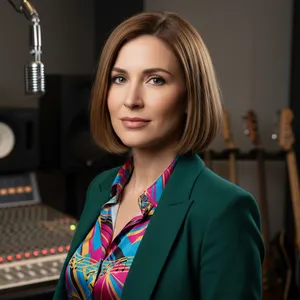
Nija Charles is one of the clearest examples of the modern writer-artist who can move between pop, R&B, and club records without sounding forced. Her career matters because it shows how a songwriter can shape huge records for other stars and still build a solo identity that feels distinct. This article breaks down her rise, the songs that define her, the shape of her solo work, and what her current run says about where music is heading.
What you need to know about her career
- She is an American singer, songwriter, and producer from Union, New Jersey.
- Her breakout came through credits on records for Lady Gaga, Ariana Grande, Chris Brown, Beyoncé, Cardi B, and others.
- The Recording Academy lists three GRAMMY nominations so far, including Songwriter of the Year, Non-Classical in 2023.
- Her solo catalog includes Don't Say I Didn't Warn You and What I Didn't Say, which arrived on January 23, 2026.
- Spotify's songwriter profile currently shows 171 credited songs and a June 12, 2026 release credit, which underlines how active she remains.
- Her writing usually blends R&B warmth, pop directness, and a strong sense of melodic drama.
Why she stands out in modern songwriting
What separates Nija from many other writers is that she never sounds like someone borrowing a lane after the fact. Her records can live inside glossy pop, hard-edged R&B, or a more street-level club setting, yet the writing still feels like it comes from the same person: direct, emotionally aware, and willing to keep the hook simple when simplicity is what lands.
I read that as both a creative advantage and a business one. In a market where artists want songs that feel personal but still stream well, writers who can supply both are rare. Nija built her reputation by doing exactly that, and the result is a catalog that can move from one superstar to the next without losing coherence.
She started earning credits in 2017 after studying at NYU's Clive Davis Institute and leaving once a publishing deal made the leap possible. That timeline matters because it explains why her work feels technically sharp but not academic; she learned the craft, then tested it immediately in real sessions. The names attached to her catalog are not there as decoration either. Beyoncé, Ariana Grande, Lady Gaga, Chris Brown, Cardi B, Summer Walker, and Kehlani are the kind of artists who only keep a writer around if the ideas land fast. From there, the most useful way to understand her work is to look at the records that made that range visible.

The songs that made her name travel
If you want the shortest possible route into her catalog, start with the songs where her writing had to do different kinds of work. Some needed pop lift, some needed R&B tension, and some needed enough personality to stand up next to superstar performances. These are the records that make her resume easy to understand.
| Song | Why it matters |
|---|---|
| Rain on Me | A high-profile pop release that showed she could write with the scale and momentum required for a global crossover. |
| No Guidance | One of her clearest R&B calling cards, balancing melody, confidence, and space for the vocal performance. |
| Positions | Proof that she can write conversational pop that still feels sleek and luxurious rather than flat. |
| Cozy | A strong example of her ability to write for an artist as singular as Beyoncé without diluting the record's attitude. |
| Ex for a Reason | A good reminder that her writing works especially well in relationship songs where tension and catchiness have to coexist. |
| Good Good | Shows how comfortably she operates in a modern R&B record built for multiple star personalities. |
What I find useful about this list is not just the star power. It is the pattern underneath it: she writes songs that can survive very different voices because the core idea is strong before the production gets flashy. That is why the next layer of her career matters so much, because she did not stop at writing for other people.
Her solo releases show a different side
Nija's solo work is where the public gets to hear what her writing sounds like when it is not being filtered through another artist's persona. Her debut project, Don't Say I Didn't Warn You, leaned into a blend of R&B, rap energy, and Jersey club influence, which gave it a sharper edge than the smoother pop records people knew from her behind the scenes. The point was never to sound like the exact same writer-as-artist formula; the point was to sound more personal, more present, and less decorative.
That distinction matters. A writer who has spent years tailoring songs for other performers can easily end up making solo music that feels generic or over-explained. Nija avoids that trap by keeping the writing tight and the mood controlled. The songs do not oversell the emotion, which is exactly why they land.
Her 2026 album, What I Didn't Say, arrived on January 23, 2026, and pushes that idea further. The project runs 10 tracks and keeps the focus on intimacy, frustration, and the push-pull of modern relationships. Singles like "I Just Called" with Blxst and "Things We Do" fit the same logic: they are melodic, but they do not sand off the tension. If the earlier solo material announced that she could step forward, this one makes the case that she knows how to stay there. That leads naturally to the craft question most readers really care about: how does she build songs that work this well for other people?
How she writes for other artists without sounding generic
The strongest clue is in the way she talks about writing: the job is to imagine how the record would feel in someone else's voice, not to force her own personality onto the track. That sounds obvious, but in practice it is where many writers fail. They write for the brief instead of for the artist, or they write for the trend instead of for the emotional truth.
Her catalog suggests a few practical rules that make her effective:
- She starts with the feeling. The mood comes first, so the record does not collapse if you strip away the production.
- She leaves room for the singer. The best Nija-written songs do not overcrowd the vocal line; they support it.
- She bends genre instead of copying it. R&B, pop, and drill elements appear in her work, but they are used as tools rather than labels.
- She keeps the hook memorable. Even when the lyric is nuanced, the central phrase is usually easy to hold onto.
- She writes with personality, not excess. The records feel lived-in rather than overworked.
She also thinks like a producer, not just a lyricist. Starting production at 13 means she hears how a record should breathe before she settles the topline, the main vocal melody that listeners remember first. That is a subtle but important edge. It helps explain why her songs often feel built from the inside out instead of patched together after the chorus is already written. And because that method travels well, it still feels current in 2026 rather than frozen in the era when her first big credits arrived.
What her 2026 run says about where the industry is headed
Her current credits are a useful snapshot of how music works now. A songwriter is no longer expected to stay in the background, and a recording artist is no longer expected to pick a single lane and defend it forever. Nija sits right in the middle of that shift. Her name can show up on a pop record, a left-field collaboration, or a solo R&B release, and none of those moves feel contradictory.
That flexibility is part of why she still reads as important in 2026. The Recording Academy's nomination record confirms that she has already been treated as more than a one-hit specialist, and the fact that her songwriter profile still shows fresh releases tells me the momentum has not slowed. More importantly, the range of artists she touches makes a broader point: the most valuable writers in this era can move across sound worlds without flattening their own identity.
Her 2025-2026 credits stretch from Tori Kelly to Latto, Cardi B, Rosalía, J-Hope, and LE SSERAFIM, which is a very modern kind of résumé. It says the same thing her solo work says: she is not locked into a single audience or a single sound. My read is that this is exactly where the industry is heading, toward creators who can be both adaptable and recognisable at the same time. If you want the quickest possible entry point into her catalog, the next section is the most efficient place to start.
The fastest way to hear what makes her different
When I want to understand a songwriter quickly, I do not start with the deepest album cuts. I start with the records that show range. In her case, these are the most efficient starting points:
- "Rain on Me" for scale, precision, and pop lift.
- "No Guidance" for R&B structure and melodic confidence.
- "Positions" for conversational pop that still feels expensive.
- Don't Say I Didn't Warn You for the first clear look at her solo identity.
- What I Didn't Say for the current version of her voice as an artist.
If you move through those five stops in that order, the picture becomes clear fast: Nija Charles is not just a credited name on big records. She is a songwriter who understands structure, a producer who understands texture, and an artist who knows how to make vulnerability sound deliberate rather than messy. That combination is rare, and it is exactly why her catalog is still worth following closely.