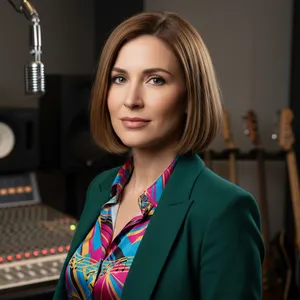
Noah Sebastian is one of the clearest examples of a modern frontman who also functions as the creative engine behind the record. I think that matters because Bad Omens is not built on image alone; the writing, production choices, and vocal dynamics all pull in the same direction. In this article, I break down what he contributes, how his songs are shaped, why the sound connects so strongly, and what to listen for if you want the full picture.
What to know about the voice and writing behind Bad Omens
- He is not just the singer; he helps define the band’s songwriting, production, and overall identity.
- His style works because it moves between harsh vocals, clean melody, and tension-heavy arrangement.
- The biggest creative shift came when the band leaned harder into personal writing and studio experimentation.
- As of 2026, the project is still active, with the official site listing festival dates and recent singles.
- If you want the fastest read on his artistry, start with songs that show both vulnerability and aggression.
What he contributes beyond the microphone
What makes Sebastian interesting is that he does not read like a standard vocalist hired to carry other people’s ideas. I would describe him as a writer-producer frontman: he helps shape melody, atmosphere, lyric direction, and the way a song unfolds from the first bar to the last. That is a very different job from simply delivering the vocal line.
| Role | What it changes | Why it matters to listeners |
|---|---|---|
| Singer | Moves between clean, melodic phrases and harsh, high-intensity delivery | Creates contrast and keeps the emotional arc alive |
| Songwriter | Builds hooks around personal tension, regret, and pressure | Makes the songs feel direct instead of generic |
| Producer | Shapes texture, pacing, and sonic weight | Gives the music its cinematic, polished edge |

Why the songs feel heavy and melodic at the same time
The sound is easy to describe badly and hard to describe well. At surface level, it sits in the metalcore and alternative-metal world, but the better read is that it uses heavy music as a frame for larger, more cinematic songwriting. I hear industrial sheen, pop-sized hooks, and an almost R&B-like attention to vocal phrasing, all pushed through a darker rock lens.
- Contrast drives the writing. A quiet line matters more when it is set against a huge chorus or a sudden scream.
- The hooks are engineered to stick. The melodies are not ornamental; they are the engine that makes the heaviness memorable.
- The production feels visual. Even on headphones, the songs sound like they were built for shadow, movement, and scale.
I think that is why the project crosses over so well. People who do not usually follow heavier bands can still connect to the atmosphere and the chorus writing, while core metal listeners still get the bite, the dynamics, and the breakdown pressure. The result is not compromise; it is balance. Once you hear that balance, the writing process becomes the real story.
How the writing process makes the records feel personal
The most revealing part of Sebastian’s approach is that he writes like someone trying to solve a feeling, not just fill a track. On the third album, he and guitarist Joakim Karlsson handled the writing, production, and engineering themselves before the mix and master were finished externally. That matters because it means the songs were built from the inside out, not assembled by committee.
Sumerian Records describes that phase as one in which the band stopped worrying about expectations and gave themselves more room to experiment. I read that as a very practical kind of freedom: if a song needs a strange texture, a household sound, or a less obvious arrangement, he seems willing to test it instead of sanding it down. That is how a track can feel intimate and synthetic at the same time.
The lyrical side follows the same logic. The recurring themes are not abstract philosophy; they are things people actually live with: guilt, regret, social media pressure, money stress, emotional disconnection, and the feeling that your mind will not slow down long enough to catch up. That is what gives the writing weight. He is not trying to sound profound; he is trying to make the pressure legible. Those habits explain why each release feels like a step rather than a reset.
The release cycle that turned him into a bigger name
It is tempting to tell this story as a sudden breakthrough, but that flattens what actually happened. The career arc makes more sense when you look at the way each release widened the band’s range and sharpened the identity at the same time.
| Era | Release or moment | What changed |
|---|---|---|
| 2016 | Self-titled debut | Established the band’s foundation and its heavier, more direct identity |
| 2019 | Finding God Before God Finds Me | Refined the darker, more melodic side of the project |
| 2022 | The Death of Peace of Mind | Opened the sound up, pushed the production further, and gave the writing more room to breathe |
| 2025-2026 | Recent singles and live dates | Shows that the project is still expanding rather than repeating itself |
The current phase matters too. The band’s official site currently lists 2026 festival dates, which tells me this is still a live, moving project rather than a closed chapter. I also read that as a sign the next record will likely be built for scale, not comfort. That is the kind of trajectory that usually comes from a songwriter who still has room to push.
What I would listen to first in 2026
If I were introducing someone to his work in a clean, efficient way, I would start with a small, deliberate sequence rather than a random playlist. The order matters because it shows how the writing evolved.
- The Death of Peace of Mind for the full blueprint of the more cinematic, emotionally loaded sound.
- Just Pretend for the clearest example of how melody can carry vulnerability without softening the edge.
- Artificial Suicide for the harsher end of the spectrum and the band’s heavier instincts.
- Dying to Love, Impose, Specter, and Left for Good for the current chapter and the direction it suggests.
That sequence gives you the fastest read on why the project works: he knows how to make tension feel inevitable, and he understands that a strong chorus lands harder when the song has earned it. In 2026, that still feels like the core of his appeal. He is not just fronting a band that sounds big; he is helping build a body of work that keeps widening without losing its center.