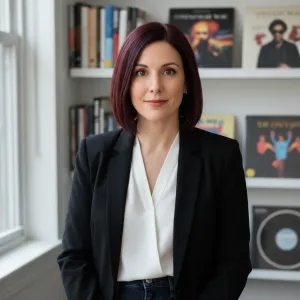
Kyle Shearer sits in the part of pop music that listeners usually discover only after they start reading credits. He is a writer and producer whose work connects glossy hook-writing with character-driven records, and that combination makes his catalog more interesting than a quick name check suggests. This article breaks down who he is, the songs that define his footprint, how his style works in practice, and why his 2026 activity still matters.
His value is in the records he helps build, not in front-facing fame
- He is a U.S.-based producer/songwriter with roots in Pittsburgh and a strong pop-credits profile.
- His name is attached to artists such as Tove Lo, Melanie Martinez, Carly Rae Jepsen, Phoebe Ryan, Becky G, and Natti Natasha.
- Spotify for Artists currently lists 128 songs written and a latest release dated June 26, 2026.
- His work shows up in both English-language pop and Latin crossover pop, which signals range rather than a narrow lane.
- The clearest way to understand him is through collaboration patterns, not through a solo-artist narrative.
Why his name matters in modern pop
The first thing I notice about Kyle Shearer is that his career makes sense only when you treat credits as the story. Concord describes him as a producer/songwriter from Pittsburgh, Pennsylvania, and that framing fits the way his name appears across albums that rely on sharp writing and tightly controlled production. He is not mainly a public-facing brand; he is the kind of creator who helps define how a track feels before most listeners ever ask who built it.
That matters because pop in 2026 is still team-driven, even when it is presented as singular and personal. A strong song often depends on a writer who can shape the topline, a producer who can leave room for the vocal, and a collaborator who knows when to make the arrangement lean or theatrical. Shearer’s credits suggest exactly that kind of role. He shows up where the artist needs both identity and precision, which is a harder balance than it looks on paper.
That credit-first profile becomes clearer once you look at the songs attached to his name, because the range is wider than one might expect from a single writer-producer. It is in those records that his real footprint emerges.
The songs and artists that define his catalog
The easiest way to understand his reach is to look at the records that keep reappearing in public discographies and platform credits. The pattern is not just “he wrote for pop artists.” It is more specific than that: he tends to land on songs where the emotional tone matters as much as the hook.
| Artist | Song | Role | Why it matters |
|---|---|---|---|
| Tove Lo | This Time Around | Co-writer | Shows an early fit with moody, emotionally direct pop. |
| Melanie Martinez | Soap | Co-writer | Points to his ability to support character-driven, slightly darker pop. |
| Carly Rae Jepsen | Never Get to Hold You | Writer | Highlights his knack for polished, melodic pop that still feels personal. |
| Carly Rae Jepsen | Julien | Writer / producer | Suggests a long-running creative trust, not a one-off placement. |
| Becky G x Natti Natasha | Sin Pijama | Co-writer / co-producer | Shows that his work extends beyond indie-pop lanes into Latin crossover pop. |
| Phoebe Ryan | Early EP-era work | Producer | Shows he has also helped develop artists, not just placed songs. |
| Carly Rae Jepsen | On Wires | Songwriter | Confirms that his catalog is still active in 2026. |
What I take from that table is simple: his catalog is not built around one signature artist or one fixed sound. It moves between glossy synth-pop, left-field pop, and Latin pop without losing coherence. That usually means a writer has a strong sense of structure rather than a rigid aesthetic obsession, and that is often the difference between a decent credit list and a genuinely durable one.
What his writing and production tend to do well
When I look across his work, I see four recurring strengths. None of them is flashy on its own, but together they explain why the same name keeps showing up on records with strong replay value.
- Hook discipline - The songs do not wait too long to reveal the main idea. That sounds basic, but it is where a lot of records lose momentum.
- Artist-first framing - The production usually supports the performer’s personality instead of overpowering it. In practical terms, that means the track leaves space for tone, phrasing, and lyrical detail.
- Genre fluency - He can move between polished pop, darker alt-pop, and crossover material without sounding like he is starting from zero each time.
- Collaboration over ego - The catalog suggests a writer who understands how to finish a record, not just how to claim authorship of it.
That mix of discipline and flexibility is what gives his work staying power, and it leads naturally to a more practical question: how do you actually hear his contribution when the final record is already polished?
How to hear his fingerprints in a finished track
Most listeners do not hear a producer by listening for a loud sonic calling card. They hear the effect of decisions. If you want to understand a songwriter-producer like Shearer, I would listen in a few specific ways.
- Pay attention to how quickly the song establishes its emotional center. His stronger records usually feel clear fast, even when the arrangement is textured.
- Notice whether the vocal sounds framed rather than buried. That often tells you the production is working for the song, not competing with it.
- Compare one track with another by the same artist. If the collaborator keeps making the artist sound more defined, not more generic, that is a good sign.
- Listen for contrast between polish and intimacy. A record can sound expensive and still feel vulnerable; that balance is one of the more useful clues that a seasoned pop writer was involved.
The common mistake is to judge a writer-producer only by recognizability. That is the wrong test for this kind of work. The real test is whether the song sounds finished, specific, and repeatable. If the answer is yes, the credit is doing its job even if the listener never notices it.
Once you start hearing records that way, the final question becomes less about who he is on paper and more about what his current activity says about the larger pop machine.
What his 2026 momentum says about modern pop writing
Spotify for Artists currently lists 128 songs written for Kyle Shearer and shows Carly Rae Jepsen’s On Wires as the latest release dated June 26, 2026. That is a useful signal, because it shows he is not just a legacy credit in pop archives; he is still part of the current working circuit.
To me, that is the most telling part of his profile. A lot of songwriter careers plateau once they establish a few recognizable placements. His seems to have settled into something more durable: a long-term collaboration model that keeps evolving with artists rather than freezing around one era. That is usually what separates a busy credits page from a sustainable creative career.
If you are following modern artists and songwriters, Shearer is worth watching for the same reason many behind-the-scenes writers matter: he is the kind of collaborator who helps define the shape of a song without needing to dominate the conversation around it. That is less glamorous than stardom, but in pop, it is often the work that lasts longest.