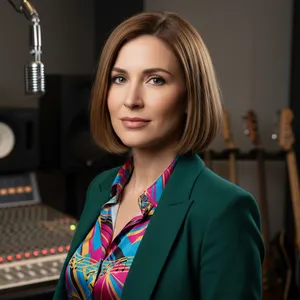
Alysa Vanderheym sits in the part of the music business that shapes what listeners hear long before they know a name. Her work shows up in the songwriting, the production, and the final emotional contour of country records that move between radio, streaming, and artist-led storytelling. This article breaks down who she is, which songs define her reputation, how her production skill changes the value of her credits, and what her current momentum says about modern Nashville.
Key takeaways at a glance
- She is a Nashville songwriter-producer with Bay Area roots and formal songwriting training from Belmont University.
- Her catalog bridges country radio, pop-country crossover, and artist-driven records.
- “Cold Beer Calling My Name” marked a major breakthrough and confirmed her hit-writing range.
- She is not just a writer; she also produces, engineers, and plays multiple instruments.
- Her 2026 activity suggests a career that is still expanding, not plateauing.
Who she is and why the name keeps showing up
Vanderheym’s path makes sense once you look at the mix of writing discipline and production curiosity behind it. She grew up in the San Francisco Bay Area, moved to Nashville for Belmont University, and studied songwriting in an environment built around Music Row.
That background matters because she did not arrive in Nashville as a one-note writer. She learned production tools early, used them to separate herself in sessions, and built a skill set that lets her think beyond melody and lyric. In practice, that means she can help shape how a song breathes, not just what it says.
I read that as the first clue to her staying power: she is useful in the room. In a market where writers are often asked to be fast, emotionally exact, and commercially aware at the same time, that combination is hard to replace. It also explains why the conversation around her quickly moves from credits to creative identity, which is where the song list becomes revealing.

The songs and collaborations that built her reputation
The easiest way to understand her profile is through the records that introduced her to a wider audience. Some cuts are straight country-radio wins, others are more intimate artist collaborations, and a few show how comfortable she is moving across genre lines without losing a clear melodic instinct.
| Song or project | Artist(s) | Why it matters |
|---|---|---|
| Talk You Out of It | Florida Georgia Line | An early breakout that helped establish her as a writer who could land in mainstream country. |
| Cold Beer Calling My Name | Jameson Rodgers and Luke Combs | Her first country No. 1, and the cut that proved she could write a song with both radio pull and staying power. |
| Lose Somebody | Kygo and OneRepublic | A streaming-heavy crossover credit that shows her work can travel well outside a narrow country lane. |
| HEARTFIRST | Kelsea Ballerini | A key part of the artist partnership that made her more visible as a creative force, not just a behind-the-scenes name. |
| Blindsided | Kelsea Ballerini | A sharp, emotionally specific cut that demonstrates how well she can support vulnerable storytelling. |
| Cowboys Cry Too | Kelsea Ballerini and Noah Kahan | A crossover duet that widened her audience and placed her work in a bigger awards conversation. |
| Another Drink | Kelsea Ballerini and Marshmello | A recent crossover credit that signals how current her ear still is in 2026. |
The pattern is more important than any single title. Her strongest credits are not random placements; they show range, empathy, and a feel for records that can live in different lanes at once. One track is well past half a billion streams, and several others are above 50 million, which tells you she is not only respected in the room but also connected to music that reaches a broad audience. That kind of reach leads naturally to the other part of her value: how the records are built.
Her work on Rolling Up the Welcome Mat mattered because it was not just a write; it was part of a co-produced project that shaped the emotional center of the EP and drew Grammy attention. That is a stronger credit than a simple line on a songwriting resume, because it shows she can help define the whole record, not only a single song.
Why her production work matters as much as the writing
Many writers can deliver a strong topline, the melody and lyric at the center of the song. Vanderheym’s edge is that she can move further down the chain. She is a multi-instrumentalist, and she also works as a producer, engineer, and programmer, which means she can help carry an idea from rough sketch to finished record.
That is not a small distinction. A songwriter contributes the core idea; a songwriter-producer can influence tempo, arrangement, texture, and the emotional arc of the track. In other words, she is not just deciding what the song says. She is shaping how the listener feels it.
That matters most in country and country-pop, where restraint is often as important as detail. A dense track can bury a good lyric. A thin one can make a hook feel smaller than it should. The best producers know where to leave air, where to add tension, and when a vocal needs to sound almost conversational. Her credits suggest she understands those trade-offs, which is why artist collaborations tend to feel coherent rather than overbuilt.
When a writer can also produce, sessions usually move faster and decisions feel more intentional. That is the bridge to her current catalog, because the next question is not whether she can do the job. It is how much larger the job has become.
What her 2026 catalog says about her momentum
Spotify for Artists currently lists 81 songs written under her name and shows a March 13, 2026 release for Erin Kinsey’s “Reasons Why We Broke Up.” It also places Kelsea Ballerini, Jelly Roll, Priscilla Block, Fancy Hagood, and Ashley Cooke among her top collaborators, which is a useful snapshot of how rooted she is in the current Nashville ecosystem.
That catalog view lines up with the broader industry picture. SESAC recognized her as a 2025 Nashville Music Awards honoree and highlighted both her ACM nominations and her work on “Cowboys Cry Too.” That combination matters because it shows two things at once: she is still actively releasing current work, and the industry now treats her as a producer-level presence, not just a writer with a few notable cuts.
For readers trying to gauge whether a music professional is still on the rise, this is the kind of evidence that matters more than hype. Ongoing releases, recurring collaborators, and awards attention together suggest a career that is still compounding. The next step is understanding what that means for the broader songwriter landscape.
What her career reveals about the next kind of Nashville writer
If I reduce her trajectory to one lesson, it is this: modern writers win by being creatively useful in more than one role. The old model assumed the songwriter stayed mostly in the background while someone else translated the idea into a record. The newer model rewards people who can write, produce, guide tone, and keep the session moving without flattening the artist’s voice.- Learn enough production to speak clearly in the room, even if you do not want to be the final mixer.
- Build repeat collaborations, because trust compounds faster than one-off placements.
- Write for songs that can survive outside the demo stage, since streaming and artist branding now expose everything.
- Stay flexible across genre lines, but keep one recognizable emotional point of view.
That is why her catalog feels so useful as a case study. It shows how a writer can move from early country placements into artist-led records, crossover collaborations, and producer-level responsibility without losing identity. The most practical takeaway is simple: in 2026, the writers who matter most are often the ones who can help finish the record, not just start it.