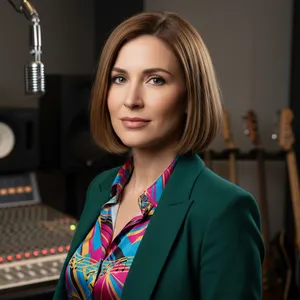
Laura Veltz is one of those songwriters whose fingerprints show up on major records long before casual listeners learn her name. Her career is a useful case study in how modern hits are built: strong melody, sharp storytelling, and the flexibility to move between country, pop, and crossover work without sounding anonymous. Here I break down who she is, what her biggest songs reveal about her style, and why her work still matters in 2026.
Key facts that explain her rise
- Laura Veltz is a Nashville-based songwriter with roots in the family band Cecilia.
- Her catalog is already substantial: Spotify currently lists 228 songs written under her name.
- The Grammy database shows five nominations, including a 2026 nod for Songwriter of the Year, Non-Classical.
- Her best-known cuts include "Speechless," "The Bones," "I Could Use a Love Song," and "What If I Never Get Over You."
- Her recent credits stretch beyond traditional country into pop, film, television, and genre-crossing collaborations.
- She also co-hosts Songwriter Soup, a podcast about the realities of the music business.
Why her name keeps surfacing in modern country-pop
What makes Laura Veltz stand out is not just that she writes hits. It is that she writes songs artists can actually inhabit. Her best work does not lean on generic heartbreak language or overbuilt metaphor; it lands because the emotional detail feels lived-in. That is a rare skill in mainstream songwriting, where a song often has to work for radio, streaming, and live performance at the same time.
I read her career as a reminder that the most valuable writers are often the least noisy ones. They are not always the face of the campaign, but they shape the records that define a moment. In Veltz’s case, the proof is in the mix of collaborators around her: Maren Morris, Jessie Murph, Demi Lovato, Kelly Clarkson, and Maddie & Tae all point to a writer who can move across lanes without losing identity.
That kind of range matters because modern country-pop is less about rigid genre borders and more about emotional clarity. If a song feels truthful, it can travel. If it feels overworked, it usually dies in the room. Veltz has built a reputation for avoiding that trap, and that is why her name keeps coming back in serious conversations about contemporary songwriting. To see why it works so well, it helps to start with where she came from.
From a family band to Nashville hitmaker
Veltz did not arrive in Nashville as a blank slate. She came out of Cecilia, the family band built around the Veltz household, and that background still shows in the way she hears harmony, phrasing, and arrangement. Early family-band experience can be limiting for some artists, but in her case it seems to have sharpened the instinct that matters most in a co-write: knowing how parts fit together before a song is even finished.
She has also spoken about moving to Nashville in 2008 after realizing that songwriter could be a real job title. That sounds simple, but it is the kind of switch that changes everything. Once a person stops treating writing as a vague dream and starts treating it as a craft with rules, deadlines, and collaborators, the work tends to get sharper.
I think that shift explains a lot of her catalog. There is a pragmatic streak in her writing, but it never turns cold. The songs still carry feeling, yet they are structured with enough discipline that another artist can step into them without friction. That balance between instinct and control is where many songwriters lose their edge, and where Veltz seems to thrive.
It also helps explain why her songs tend to feel emotionally direct without sounding blunt. She knows how to turn private feeling into something a crowd can recognize immediately, which leads straight into the records that made her name unavoidable.
What her biggest songs reveal about her writing
The cleanest way to understand her style is to look at a few of the songs most closely associated with her name. These are not just credits to stack up; each one shows a different facet of her range.
| Song | Artist | What it shows |
|---|---|---|
| "Speechless" | Dan + Shay | How she can build a wedding-sized emotional payoff from plain language and a clean hook. |
| "The Bones" | Maren Morris | Her ability to make relationship resilience feel quotable without sounding forced. |
| "I Could Use a Love Song" | Maren Morris | Direct vulnerability, handled with enough restraint that it never tips into melodrama. |
| "What If I Never Get Over You" | Lady A | A song that stays suspended emotionally, which matches the subject better than a neat resolution would. |
| "High Road" | Koe Wetzel and Jessie Murph | Proof that she can work in a rougher, more modern crossover space without losing melodic control. |
There is also a useful lesson here for newer writers: simplicity is not the same thing as thinness. Veltz’s hooks are accessible, but they are not shallow. The writing carries weight because the images are chosen carefully, not because the lyric is packed with decoration. That distinction matters more than people admit.
Once you see that pattern, it becomes easier to understand why her recent work feels broader than the catalog of a traditional Nashville hitmaker.
Why her recent work reaches beyond country
By 2026, Veltz’s catalog looks intentionally wide. She is still anchored in Nashville, but her recent credits stretch into pop, alt-country, and even film and television. That kind of spread usually means one thing: other creatives trust her to deliver emotional architecture, not just a catchy line.
Recent projects have included work tied to film and television, alongside songs for artists who do not sit neatly inside one genre box. That matters because the current market rewards writers who can adapt to different delivery systems. A streaming-era ballad, a crossover single, and a soundtrack placement all ask for different instincts, but the underlying job is the same: make the feeling believable.
Her podcast, Songwriter Soup, adds another layer to that picture. It is not a vanity side project. It openly deals with the business side of songwriting, including the realities that many listeners never think about: collaboration, credit, income, and the patience required to build a sustainable career. I respect that transparency because it turns her into more than a hitmaker; it makes her part of the conversation about how the profession actually works.
That is also why her newer collaborations matter. When a writer can move from a polished country ballad to a sharper, more contemporary crossover record, it usually means the market is following their instincts rather than the other way around. In Veltz’s case, the reach feels earned, not opportunistic.
Why Laura Veltz still feels like a songwriter’s songwriter in 2026
If I were tracking her work closely, I would watch three things: collaborator lists, genre shifts, and the balance between commercial release and behind-the-scenes influence. Those are the clearest signals of where a writer’s taste is moving before the broader audience catches up.
- New credits with unexpected artists usually show where her pen is headed next.
- Film and TV placements tell you she can write for mood, not just radio.
- Her podcast and public talks reveal how seriously she treats the craft and the economics of the job.
The larger lesson in her catalog is straightforward: specificity travels farther than generic polish. That is why Laura Veltz keeps showing up in important records, not just memorable ones. For artists and songwriters, she is a strong reminder that the best commercial writing often starts with honesty, then gets sharpened through structure.
In a year when listeners are drowning in content but still hungry for songs that feel human, that combination is exactly why her name continues to matter.