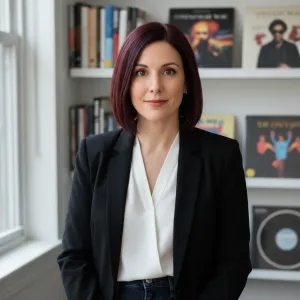
Jutes is a Canadian singer-songwriter who built his name by refusing to stay inside one lane. He started with raw, confession-heavy rap-leaning songs, then moved into pop-punk and alt-rock without losing the emotional edge that made the writing work. The useful story here is not only the attention around him; it is how Jordan Lutes turned a narrow first impression into a catalog that still feels alive in 2026.
The essentials behind his catalog
- Jordan Lutes performs as Jutes, a Canadian singer-songwriter with a genre-blending catalog.
- His music moves between trap-leaning hip-hop, pop-punk, alt-rock, and grunge-influenced textures.
- His writing is direct and personal, often tied to identity, recovery, relationships, and change.
- He co-wrote on Demi Lovato’s HOLY FVCK, which widened both his reach and his rock-forward confidence.
- In 2026 he is still active, teasing new music and keeping his live presence visible.
Who he is and why he matters now
The simplest answer is that Jutes is the stage name of Jordan Lutes, a Canadian singer-songwriter whose career now sits somewhere between alternative rock, pop-punk, and emotionally charged rap-adjacent writing. What makes him interesting is that he never feels like a pure genre tourist; even when the production shifts, the voice stays rooted in the same blunt, confessional tone.
I think that is why his name keeps circulating in music coverage. He is not only a collaborator or a supporting character in somebody else’s story. By 2026, he has a recognizable body of work and a 2026 Juno nomination for Breakthrough Artist or Group of the Year, which is a strong signal that his momentum is real rather than borrowed.
That leads directly to the more revealing question: where did that voice come from?
The background that shaped his writing
He grew up outside Ottawa, on a farm in Kars, and that contrast matters more than it sounds. The distance and isolation show up in the way he writes: less polished slogan, more private feeling put into plain language. He was drawn to basketball and filmmaking first, enrolled in film school, then lost interest and started writing songs on a webcam mic with GarageBand.
The most telling detail is how casually the songs started. They were not born as a grand career strategy; they began as a way to fill time, then turned into the thing he wanted to do every day. He has described songwriting as a kind of therapy, and that tracks across the catalog. The songs usually sound like they were written by someone trying to name a feeling precisely rather than impress a room.
That background explains why the music can feel hard-edged without becoming hollow, which is where the sound itself comes in.

What his sound is built on
Jutes is difficult to box in, and that is part of the point. Across his records, I hear trap-infused hip-hop, aggressive pop-punk, alternative rock, and flashes of grunge and hard-edged R&B. The beats can feel modern and streamlined, but the guitars and vocals usually pull the songs into something more ragged and emotional.
That blend works because the genre shifts are not random. They follow the mood of the writing. When he sounds angrier, the track gets heavier. When the lyric leans toward regret or self-examination, the arrangement opens up and lets the vocal sit closer to the front. In other words, the production serves the emotion instead of the other way around.
For listeners, that means the catalog rewards close attention. If you only sample one single, you might misread him as just another alt-pop act. Once you hear several tracks side by side, the real pattern becomes obvious: the emotional consistency is the hook, not one fixed sonic template.
Once that pattern clicks, the release order starts to tell a much clearer story.
The releases that map his evolution
The easiest way to understand his arc is to listen in stages rather than jumping straight to the newest song. Each release marks a small but meaningful shift in how he writes, sings, and arranges his material.
| Year | Project | Why it matters |
|---|---|---|
| 2016 | Cocaine Cinderella | Early pop-rap with raw, self-lacerating energy, and the first clear sign of his emotional directness |
| 2021 | Careful What You Wish For | An independent reset built around consistent writing and experimentation |
| 2022 | HOLY FVCK co-writes | A collaboration phase that pushed his rock instincts into a bigger frame |
| 2024 | Sleepyhead | A fuller alt-rock and emo-leaning identity, and one of the clearest entry points for new listeners |
| 2025 | Dilworth | More self-defined and place-based, which makes the writing feel rooted in memory instead of momentum |
| 2026 era | mannequin + goodnight (interlude) and chin up, beautiful | The current phase suggests tighter arrangements and a more direct emotional register |
What I like about this sequence is that it does not force a false “before and after” story. He did not wake up one morning as a different artist; he kept testing the edges until the rock elements, melodic instincts, and darker lyrics finally locked together.
The next step in that evolution was collaboration, and that is where more listeners started paying attention.
Why the Demi Lovato collaboration mattered
The Lovato connection gets a lot of attention, but the interesting part is not gossip; it is craft. He co-wrote songs on HOLY FVCK, including tracks like “Substance,” “City of Angels,” and “Happy Ending,” and that session clearly pushed him toward a more full-bodied rock direction.
There is a practical lesson in that. Writing for another artist can sharpen your own instincts faster than writing alone, because you have to think about structure, language, and emotional precision in a different way. In his case, the collaboration did two things at once: it widened his audience and confirmed that the heavier material he wanted to make could actually work at scale.
It also helps explain why his later releases feel more deliberate. The partnership did not turn him into a different writer; it gave him a stronger frame for the one he already was.
That brings us to the present tense, where the important question is no longer whether he can do this, but where he is taking it next.
Where his 2026 era is heading
In 2026, the clearest signal is that he is still building rather than repeating. The current single cycle and the teaser for chin up, beautiful suggest more direct writing and tighter arrangements, while the live side keeps him visible as an active artist rather than a studio-only name. That matters because it shows he is treating the next phase as a continuation of the same arc, not a rebrand.
His songwriter identity deserves as much attention as his artist identity. He is comfortable moving between his own releases and outside collaborations, which is usually where a career starts to feel durable instead of merely visible.
That is the part I would keep in mind if you are only skimming the headlines: the catalog keeps getting more specific, not more generic.
The thread that makes him worth following
What I would listen for across the catalog is not genre labels, but a very specific habit: he keeps turning private damage into usable melody. That is a rare balance, and it is why the songs can move from bruised rap to serrated rock without feeling like a restart.
If you want the shortest route into his work, start with Sleepyhead, then go back to Cocaine Cinderella, and then listen to the HOLY FVCK co-writes. That sequence gives you the emotional range, the early voice, and the collaborator side in the least amount of time. What holds all of it together is the same thing I keep coming back to: he writes like someone trying to get honest before the feeling disappears.