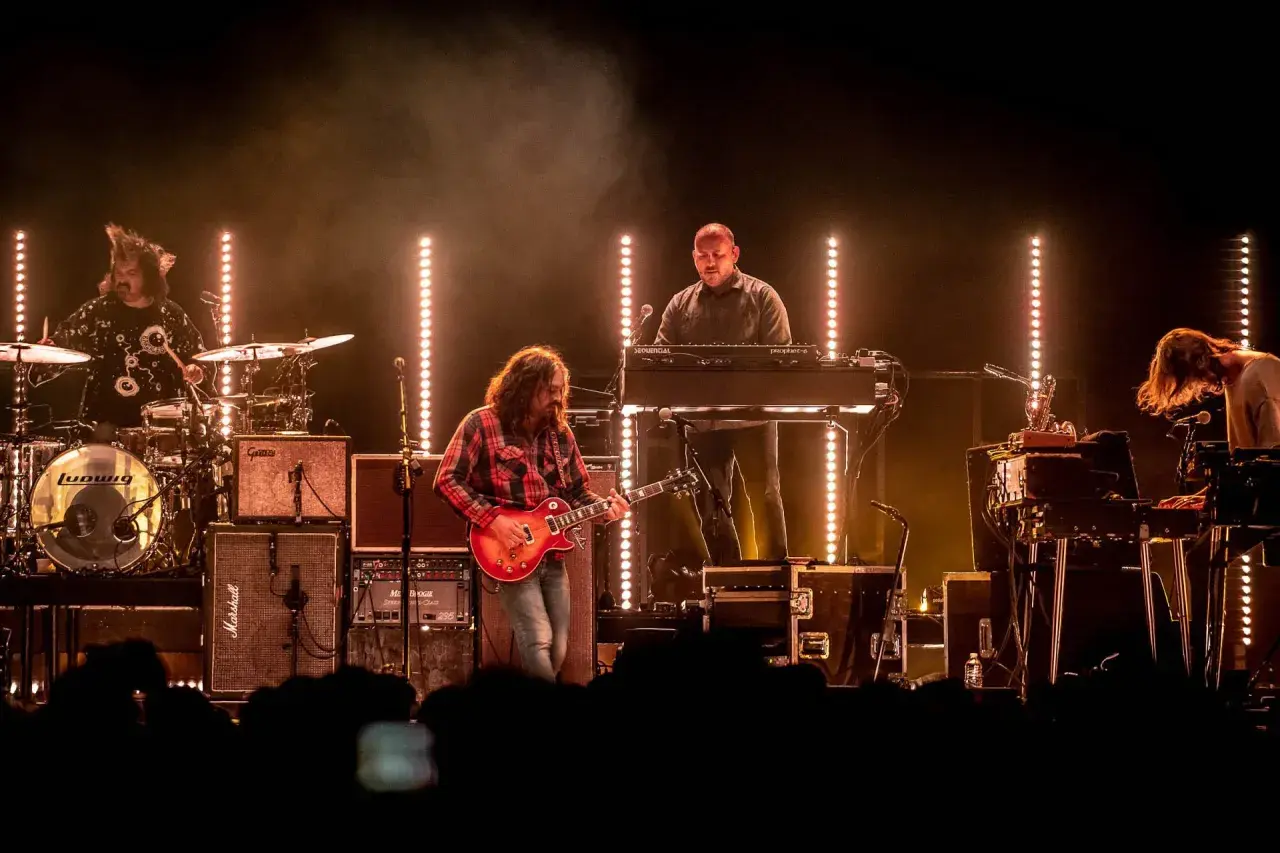
The War on Drugs setlist is best treated as a live snapshot, not a static playlist. Recent concerts show a band that keeps a reliable core of songs in place while shifting the order, the pacing, and the surprises depending on whether the room is a festival field, a theater, or a special hometown bill. This article breaks down what usually appears, what changes from show to show, and how to read the live notes without overthinking them.
Key things to know before the show
- The live core is stable. Songs like Red Eyes, Under the Pressure, Harmonia's Dream, and Pain keep returning because they anchor the band’s sound.
- Festival sets are shorter and tighter. Expect fewer deep cuts and faster movement to the biggest climaxes.
- Headlining shows give the band room. That usually means longer transitions, more breathing space, and a better chance of surprises.
- Special notes matter. Labels like live debut, fan request, or cover can tell you more about a show than the song order alone.
- Exact order changes often. The best expectation is a core framework, not a fixed script.
What a current live set usually looks like
When I look at the band’s current live pattern, I see a set built around a few reliable anchors rather than a rigid greatest-hits run. In recent 2025 and 2026 listings, the same names keep resurfacing: Harmonia's Dream, Under the Pressure, Who's That, Red Eyes, Pain, An Ocean in Between the Waves, Eyes to the Wind, I Don't Wanna Wait, Comin' Through, and I Don't Live Here Anymore. That tells me the current live identity is not about constant reinvention; it is about rotating a small set of high-impact songs into different shapes.
| Song | Why it keeps showing up | Live function |
|---|---|---|
| Under the Pressure | It has the long build the band does so well. | Late-set anchor, often the emotional summit. |
| Red Eyes | It is immediate, recognizable, and easy for a crowd to lock into. | Release point and crowd response song. |
| Harmonia's Dream | It now feels like part of the band’s modern foundation. | Current-era centerpiece. |
| I Don't Live Here Anymore | It bridges the newer material with the older live identity. | Flexible opener, closer, or major mid-set track. |
| An Ocean in Between the Waves | It gives the band room to stretch and expand dynamically. | Extended build and instrumental payoff. |
Setlist.fm’s 2026 live stats back up that picture: the most repeatedly logged songs in the current cycle are already clustered around the band’s biggest live statements. That is useful because it shows the band is not just touring album tracks; it is actively shaping a core repertoire that works in a room, not just on record. From there, the next question is how much that framework changes when the venue changes.
Why the order changes from festival to headliner show
I would treat a festival slot and a full headlining set as two different products. A festival performance has to land fast, so the band usually leans toward compact momentum, strong hooks, and the songs most likely to hit even if someone is hearing the band for the first time. A headlining show can breathe, which lets the band move from one slow-burn section to another without rushing the payoff.
| Show format | Typical set length | What that means in practice |
|---|---|---|
| Festival slot | About 45 to 60 minutes | Usually 8 to 10 songs, with the biggest staples prioritized and fewer detours. |
| Headlining theater or club show | About 75 to 100 minutes | Usually 11 to 13 songs, with more room for pacing, transitions, and one-off surprises. |
| Special hometown or benefit show | Can stretch beyond 100 minutes | More likely to include covers, requests, deep cuts, or even multiple sets. |
That difference matters. A recent festival appearance ran around 9 songs in roughly 50 minutes, while a larger live appearance stretched closer to 80 minutes with an extra song at the end. I do not read the shorter version as incomplete; I read it as compressed. The band is still saying something, just with less room to say it. That compressed-versus-expanded split is the key to understanding the set before you even look at the song list.
The songs that keep returning for a reason
If I had to name the songs most likely to shape the night, I would start with the tracks that function like structural beams. These are not just fan favorites; they are the songs that let the band control the room.
- Under the Pressure is the big emotional engine. It earns its place because the song can keep rising without losing shape.
- Red Eyes is the fastest route to recognition. It wakes up a crowd immediately and gives the room something to sing back.
- An Ocean in Between the Waves works as the patient centerpiece. It is built for extension, which makes it ideal for a live band that likes to stretch out.
- Eyes to the Wind tends to soften the set without flattening it. It gives the night a more reflective middle.
- Pain is a useful connector. It sits comfortably between the older material and the newer live identity.
- Harmonia's Dream and I Don't Live Here Anymore are the modern anchors. They tell you what era the band is currently living in.
What matters here is not just popularity. These songs solve live problems. They can open, pivot, settle, or climax, depending on where they are placed. That is why the setlist feels coherent even when the exact order changes from city to city.
How to read the live notes without overthinking them
The small labels attached to a setlist matter more than most people realize. I always read them before I obsess over the order, because they tell you whether you are looking at a standard night, a special booking, or a show with more room for experimentation. A recent Ticketmaster listing for a July 2026 Belgium show tagged two songs as new, marked a couple of others as fan requests, and still kept the familiar staples in place. That is the pattern to watch.
- Live debut means the song is new to the stage, so the band is still figuring out how it behaves in front of an audience.
- Fan request usually means the band had room to bend the set for the room, which is a good sign if you want surprises.
- Set 1 and set 2 signal a special structure, usually a longer or more unusual performance.
- Cover means the band is stepping outside its own catalog, often to add color or honor a specific influence.
- Partial listings should be read carefully. A short entry is not always a short concert; sometimes it is simply an incomplete log.
This is why I do not judge a night by the first five lines of a setlist alone. A five-song entry can represent a keynote performance, a truncated public appearance, or a listing that has not been fully documented yet. The surrounding notes tell the real story. Once you can read those signals, the next step is planning around them instead of being surprised by them.
How I would plan around the set before buying a ticket
If I were choosing between dates, I would start with the kind of show rather than the city name. For a festival, I would expect the strongest and most direct version of the band: shorter, louder, and built around the songs that land quickly. For a full headlining date, I would expect more atmosphere, longer arcs, and a better chance that the band slips in something unusual.
- Pick the right format first. If you want the fullest possible live experience, a headlining theater or club date usually beats a festival slot.
- Look for venue-specific notes. Special events, benefit shows, and hometown nights are the ones most likely to drift from the standard pattern.
- Expect at least one long build. The band does not rely on constant punchy pacing; it often works toward a slow release instead.
- Do not assume a new song replaces a classic. In practice, the band usually adds new material by shifting the order, not by dropping the songs people came to hear.
- Check the live notes after the show if you care about the details. That is where you will see requests, covers, and debuts documented clearly.
For U.S. readers, the practical rule is simple: festivals give you the broad outline, while full headline concerts give you the full picture. If you want the band’s current identity in one night, choose the longer set. If you want the fastest read on their live power, the festival version will still tell you plenty. Either way, the current rotation shows a band that knows exactly which songs carry the weight.
What the 2026 live pattern tells us about the band
The most interesting thing about the current live picture is its balance. The center of the set feels stable, but the edges are flexible. That tells me the band is comfortable treating a concert like a living arrangement rather than a fixed product. The staples are still doing the heavy lifting, but there is enough room around them for newer songs, requests, and the occasional left-turn cover.
That is good news for anyone seeing the band this year. You are unlikely to get a random shuffle with no shape, and you are equally unlikely to get the exact same order twice in a row. The best expectation is a strong framework with enough variation to keep the night alive. If you want one concise takeaway, it is this: the set is built to flow, not to sit still.
