The first Glastonbury Festival was small enough to feel improvised, yet specific enough to explain the entire future of the event: a £1 ticket, about 1,500 people, free milk from the farm, and a lineup built around what could be made to work on short notice. What matters most is not nostalgia but structure - this debut shows how Glastonbury grew from a local farm gathering into a cultural institution without losing its sense of experiment. Below I break down the origin, the lineup, the 1971 pivot, and the details that still define the festival’s identity.
What the inaugural Glastonbury event was really like
- It opened in late summer 1970, the day after Jimi Hendrix died.
- It was called the Pilton Pop, Folk and Blues Festival, not yet the Glastonbury Fayre name used in 1971.
- Attendance was about 1,500 people, and admission cost £1 with free milk from the farm.
- Marc Bolan’s Tyrannosaurus Rex stepped in for The Kinks, who had been due to headline.
- The event was inspired by the Bath Festival of Blues and Progressive Music, plus the broader festival boom of the era.
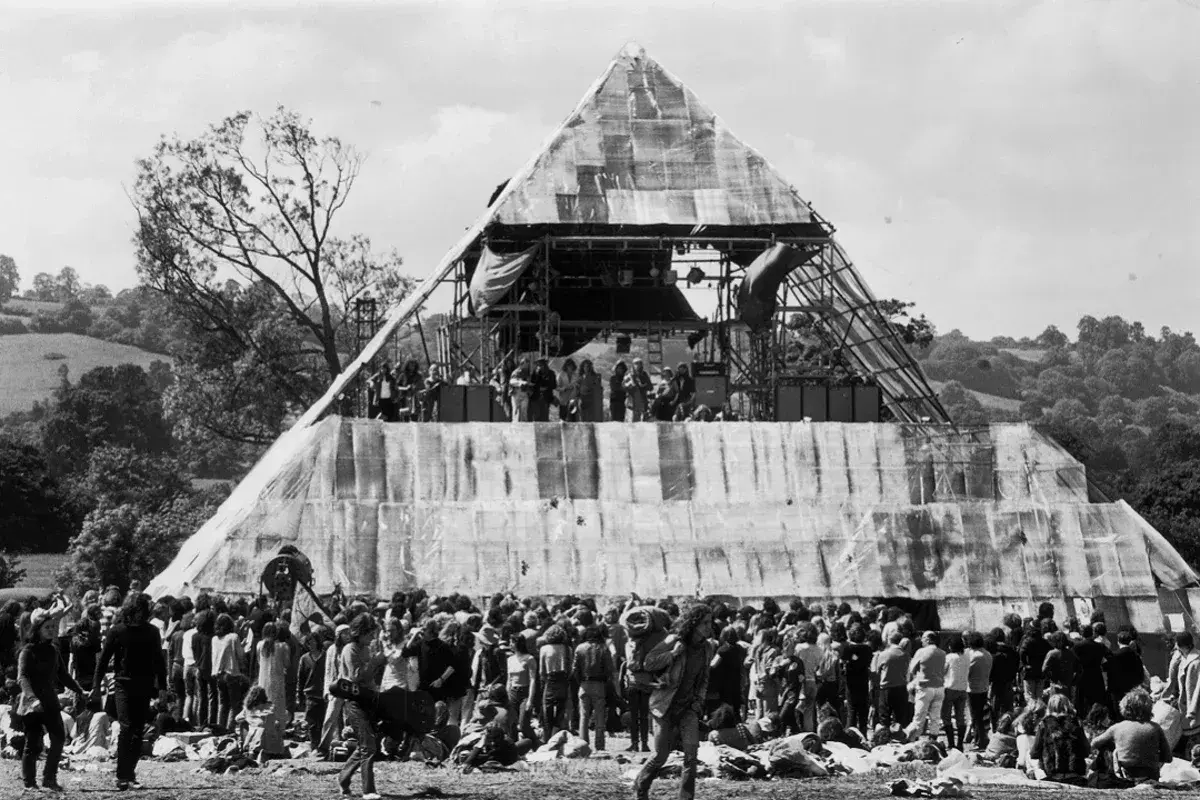
- The next year changed the template: free entry, summer solstice timing, and the first Pyramid Stage.

How the 1970 debut started
What I find most interesting about the debut is that it began as a practical idea, not a grand brand launch. Michael Eavis had been inspired by the Bath Festival of Blues and Progressive Music, and he scaled that energy down to his own dairy farm in Pilton, Somerset. According to the official Glastonbury history, the first event ran over two days in 1970 and opened the day after Jimi Hendrix died, which places it firmly inside the end of the counterculture era rather than outside it.
The setting matters. This was not a purpose-built arena with polished access routes and a corporate production machine. It was a farm festival with a local frame of reference, and that is why the early Glastonbury story feels more intimate than myth usually allows. The debut matters because it shows the festival was born from adaptation: take a major live-music idea, strip away the excess, and see whether the audience will come.
Who played and what the first crowd saw
The original lineup tells you a lot about the musical moment Glastonbury was stepping into. The billed acts included Marc Bolan, Keith Christmas, Stackridge, Al Stewart, and Quintessence, with Tyrannosaurus Rex stepping in for The Kinks at short notice. That replacement is not a footnote; it is the story. Early Glastonbury was already built on flexibility, and the festival’s identity was shaped by whatever could land on the farm and make sense in the field.
| Artist or act | Why it matters |
|---|---|
| Tyrannosaurus Rex | Marc Bolan’s group filled the headline slot and gave the debut a more glam-leaning edge than the original plan. |
| The Kinks | Their cancellation forced the organizers to improvise, which became part of the festival’s early character. |
| Keith Christmas | Represents the folk-rooted side of the bill and the softer aesthetic of the era. |
| Stackridge | Shows how eclectic the booking already was, even before Glastonbury became famous for genre mixing. |
| Al Stewart | Connects the first festival to singer-songwriter culture rather than only to rock spectacle. |
| Quintessence | Brings in the psychedelic, spiritual thread that would later become very Glastonbury. |
I read this lineup as a blueprint in miniature: folk, early glam, and experimental rock all sharing the same ground. That mix is one reason the event never felt like a single-genre festival, and it leads directly to the bigger transformation that arrived in 1971.
Why 1971 changed the story
The next year is where the event stopped looking like a local experiment and started looking like Glastonbury in the modern sense. It was renamed the Glastonbury Fayre, moved to the summer solstice, and took on a clearer manifesto-driven spirit. The V&A archive traces that shift clearly: by 1971 the founders were thinking not just about concerts, but about environmental values, spiritual atmosphere, and a broader cultural mission.
| Feature | 1970 debut | 1971 follow-up |
|---|---|---|
| Name | Pilton Pop, Folk and Blues Festival | Glastonbury Fayre |
| Admission | £1, with free milk and free camping | Free entry supported by backers |
| Timing | Late summer 1970 | Aligned with the summer solstice |
| Stage design | Temporary farm-festival setup | First Pyramid Stage appears |
| Creative focus | Music-first, modest scale | Music plus a more explicit cultural manifesto |
That table captures the real turning point: the festival did not simply grow; it found its narrative. Once the solstice timing, the Pyramid Stage, and the new ethos arrived, the event stopped being just a good idea and became a destination with symbolic weight. From there, the question shifts from "what happened in 1970?" to "why did that tiny event stick?"
What made the inaugural event feel so different
If I had to reduce the first year to one phrase, I would call it a farm-scale festival with improvisational energy. The crowd was around 1,500 people, the ticket was £1, and the extras were charmingly literal: free milk from the farm and the sense that everyone knew they were inside something unfinished. That unfinished quality is important, because the best debut editions often leave room for the audience to complete the idea.
There was also a practical realism underneath the romance. A two-day event on working farmland is never just about music; it is about access, weather, crowd flow, and whether the whole thing can be repeated. The first Glastonbury worked because it kept its ambitions small enough to survive its own first attempt. In festival terms, that is often the difference between a one-off and a legacy brand.
This is also where readers sometimes overstate the myth. The debut was not yet the huge, globally recognized ritual people picture today. It was closer to a well-organized leap of faith, and that distinction helps explain why later years felt like evolution rather than reinvention.
Why the debut still matters now
The reason people still care about the first Glastonbury is that it explains the festival’s balance of scale and personality. Even after decades of expansion, the event still carries the DNA of that first field: a willingness to mix genres, a preference for cultural meaning over slick packaging, and an instinct for turning logistics into atmosphere. That is why the origin story matters to music fans, not just to historians.
It also changes how I think about modern festival culture. A lot of big events are launched with a polished identity and then try to manufacture soul later. Glastonbury did the opposite. It built identity from necessity, then let the mythology accumulate around it. That is a harder path, but it tends to produce festivals people remember for reasons beyond the bill.
For anyone studying concerts and festivals, the lesson is simple: scale is not the first thing that creates importance. The first edition was important because it was specific, resourceful, and honest about what it was. That combination is still the clearest explanation for why the festival outgrew its origins without losing them.
